Wednesday, February 29, 2012

Video: Ubuntu for Android Running On Motorola Atrix 2

At Mobile World Congress, Canonical is giving attendees a chance to check out how well Ubuntu for Android works in person. Ironically, they're demoing the operating system on the Motorola Atrix 2, which has existing desktop-esque functionality. Hey, it comes with a dock, so why not?

Sarah Silbert of Laptop Magazine went hands-on with the Android phone turned desktop and liked what she saw, though the system wasn't lightning fast.

"…the demoed version wasn't the fastest phone on the block–we noticed a few seconds' delay between clicking and launching Android apps on the Ubuntu desktop ecosystem–we're sure the handsets that make it to market will be a few notches better."

(Read: Ubuntu For Android Turns Your Smartphone Into A Real Computer)

Ubuntu for Android

The Atrix 2 does meet the minimum hardware requirements (dual-core processor, 1GB of RAM), which makes me think that when Canonical said they were excited about quad-core phones, they meant that as a big hint. Of course, it's also possible that the OS wasn't fully tweaked to run the fastest with that particular hardware. See it in action in Silbert's hands-on video below.

It would please me to no end to discover that Canonical is working with Motorola to replace their Webtop experience with Ubuntu for Android. Let's hope this collaboration doesn't also produce prohibitively expensive accessories, too.

Since Canonical's Mark Shuttleworth is already on record as saying he wants to put Ubuntu on tablets as well as smartphones, I'm hoping to see Ubuntu for Android working on a Samsung Galaxy Tab (or Note) or another sweet Android slate in the near future as well.

Video: Ubuntu for Android Running On Motorola Atrix 2 is a post by from Gotta Be Mobile.


It’s Official: March 7th is iPad 3 Day

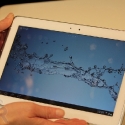
iPad 3 inviteApple's inviations for the March 7th iPad 3 event are hitting right now with the tag line, "We Have Something You Really Have To See. And Touch."  The event is to be held at the Yerba Buena Center for the Arts in San Francisco and is scheduled to begin at 10:00 AM Pacific / 1:00 PM Eastern.

Be sure to tune in next Wednesday as TechnoBuffalo brings you all the coverage of one of the most highly anticipated product launches of the year.


Is the Home Button Missing on the iPad 3?

With all of the excitement surrounding the invitations going out for the iPad 3 event today, we noticed something here at TechnoBuffalo: Is the home button missing on the iPad 3?

Our own Jon Rettinger brought up the point to me shortly after seeing the invitation image that it appeared that the home button might be missing from the iPad 3.  Being someone that never turns down a challenge, and figuring it might be some fun to speculate before next week's announcement, I took up the reigns of this cart to see what I could figure out.

First, the image in question.

iPad 3 invite

At first glance, it appears the home button may be indeed missing, so, luckily, I still had the same background image in my photo library on my iPad 2, so I put it back in place, matched up rain drops and see that they are indeed the same image. Working from there I figured out the hand is in the bottom right corner of the image, and assuming there are 5 icons in the dock, the home button should be directly below the Maps icon.  Here is a picture of my own iPad 2 with five icons in the dock in portrait mode.  (click any of the images for full size)

5 icons in dock - portrait

As you can see, matching up the rain drops, Maps should be directly above the home button in the invitation image if the iPad 3 is indeed in portrait mode, and matching up the water.

Here it is with six icons in the dock in portrait mode, and as you can see, the icons get too close together, and the corresponding rain drops become hidden.

6 icons in dock - portrait

Our own Noah Kravitz asked me if the iPad 3 in the image was potentially in landscape mode, so I followed up by taking pictures in that mode with 5 and 6 icons in the dock.

5 icons in dock - landscapeWith 5 icons in the dock, the app icons are way too far apart to match up with the invite image.

6 icons in dock - landscapeWhen you have six icons in landscape, the water droplets you need to use as markers get obscured by the Maps icon.

We do feel safe in staying the iPad 3 in the invitation image is indeed in portrait mode, and while it does appear the home button is missing, this is of course not scientifically conclusive that it is indeed gone, but it certainly adds another layer of mystery to be answered during next week's announcement.

There is however one caveat to all of this, as has been rumored endlessly, the new display is supposed to be 2048 x 1536, double the density of the iPad 2.  There is a possibility that the density could have potentially shifted the rain drops slightly, but we don't know that for sure as of yet.

We have been hearing since last year that Apple may be moving towards buttonless versions of the iPhone and iPad, and if these pictures are anything to go by, that time may be here as soon as next week.

What do you think?  Is the home button gone from the iPad 3?


Doro PhoneEasy 740 smartphone hands-on at MWC 2012

Don't recognize the name? If so, it's probably because Doro is a completely new player in the smartphone industry, as it doesn't necessarily quench the appetite of power users. The vendor primarily focuses on providing the elderly with simple handsets, which in the past equated to offering nothing but feature phones. Doro's got a few new tricks up its sleeve which may be the most ridiculously easy transition from old-school to new-school yet. Their creation, with a title nearly as simple as the device itself, is called the PhoneEasy 740. It's a phone running essentially a forked Android OS with an incredibly user-friendly launcher -- called the Doro Experience -- that consists of only a few major functions, such as phone, messages, email and pictures. As for the handset itself, you're looking at a meager spec sheet: 5MP rear camera, 3.2-inch HVGA shooter, four hours of continuous talk time, FM radio, 512MB of RAM and 4GB internal memory. The software itself isn't fully functional yet, so we were only able to scroll through the main menu. We're anticipating the device to be ready in time for a summer release in markets around the world.

Speaking of the Doro Experience, the UI's going to be available on tablets this spring as an optional Android launcher. Fortunately the software can be paired with a desktop-specific app -- the Doro Experience Manager -- that gives the user the ability to remotely customize and manage the device. This is actually quite ideal, due to the fact that it's not limited to a proprietary Doro-made tablet. We haven't heard details on pricing and availability, but we'll get that information as it comes in. 

Visualized: Nokia's 41-megapixel PureView sensor

If you thought a bigger pixel count just meant bigger file sizes, then take a look above. That big guy at the bottom is the 41-megapixel sensor responsible for those awesome Nokia 808 PureView shots we saw at MWC on Monday. The two above it are 8- and 5-megapixel sensors respectively, and give you an idea of the real-estate cost of packing a superior snapper. At two and a half times the physical size of the N8's prized optics, we think the PureView system earns its title as the biggest thing in mobile imaging somewhat convincingly.

Permalink   


Tianyu K-Touch Treasure V8 hands-on at Mobile World Congress 2012 (video)

Ever heard of Tianyu? You probably haven't, but that's why the Chinese manufacturer left most of the heavy PR lifting for its ICS-equipped, quad-core phone to NVIDIA at this year's Mobile World Congress 2012. Details on this Tegra 3-based Android handset are admittedly scarce for the time being, but from what we were able to glean, the 4.3-incher should be able to hold its own in the high-end smartphone market. Aside from an 8 megapixel shooter with single LED flash on its back and the aforementioned CPU clocked at 1.5GHz, there's not much else to divulge spec-wise.

In terms of build, the design is a mixed bag. From afar, the Treasure V8 appears sleek and even (dare we say it?) sexy, but once the unit's in hand, you'll notice the cheapness of the glossy, white plastic enclosure. A metal trim borders the device lending to the mix of high and low quality materials used in its construction, but actually makes the phone uncomfortable to hold. The screen also tapers in towards the edges, leaving a ridge to form that's unpleasant in the hand. It doesn't appear that this is the final build of the product and it could even wind up becoming sleeker as it approaches an indeterminate launch, so there's room for improvement. Of course, pricing and availability for China are also unknowns, but we have a feeling that could very well be resolved in the coming weeks.


Permalink   

Toshiba Excite 10 LE gets March 6th launch date, confirmed $530 price, yet another name

Toshiba Excite 10 LE gets March 6th launch date
First it was the AT200, then the Excite X10, and now it's the Excite 10 LE. But behind the onion-like layering of names sits a singular and rather beautiful slate, with a 10.1-inch LED backlit display, a 7.7mm (0.3-inch) chassis and a righteous 1280 x 800 resolution. Toshiba says it'll arrive at select US retailers on March 6th, which happens to coincide pretty closely with another possible technology incident. And since there could well be some tough buying dilemmas on the horizon, let's recount just a few more specs: The $530 version of the 10 LE has 16GB of storage, while 32GB can be had for $600. Both variants are WiFi-only and will run Android 3.2 out of the box, but they'll be upgradeable to ICS sometime in the spring. The 1.2GHz TI OMAP 4430 processor will whirr for up to eight hours on a charge; connectivity includes micro-USB, HDMI and microSD; the rear camera shoots 1080p video and 5-megapixel stills. There, does that make things any easier? No? Then there's a full press release after the break. Gosh, you're demanding.


ZTE PF 100 hands-on at Mobile World Congress 2012

ZTE's been making some slow, but steady progress as it transitions from no name, white label manufacturer to more of a well-known brand. Aiding the company in that exact mission is one of its latest tablets, the PF 100, shown off by NVIDIA at this year's Mobile World Congress. The apparently stock Android 4.0.3 slate packs a Tegra 3 CPU inside and 10.1-inch 1280 x 800 display. The unit we saw is far from a finished production model, given the fact that it was literally bursting apart at the seams and appeared as if it'd been roughly handled. We imagine the final product will be a bit more hardy than the one we had in-hand, but that shoddiness aside, it's still a hulk of a tablet.

Indeed you won't find the design at all charming; it's rough, thick and inelegant with a chunky bezel on front and mix of hard, grooved rubber and plastic on back. All of the ports and hardware keys are relegated to the top edge of the device with slots for both SIM and microSD covered by a single flap. There's also a dual camera setup, as well as stereo speakers and a proprietary dock connection on the base. As you might expect, performance on the tablet was incredibly fast thanks to its 1.5GHz quad-core processor and the one game we demoed loaded quickly, showcasing responsive controls. No further details about pricing, markets or availability have been announced at this time, but we expect those important tidbits to be forthcoming in the weeks ahead. You can check out a hardware tour of the tablet in the gallery below and be sure to jump past the break for a full video walkthrough.   

Tuesday, February 28, 2012

Hands on with Samsung’s Galaxy S Blaze 4G for T-Mobile

Samsung has a number of new devices on hand at this year's Mobile World Congress, and one of them was the Galaxy S Blaze 4G set to launch on T-Mobile later this year. We got a chance to check out the Blaze 4G, and we left relatively unimpressed. To be fair, the Blaze is a lightning-fast smartphone on par with a number of recent additions to Samsung's Galaxy line, but it's hard to get excited over a phone that is only a modest upgrade compared to T-Mobile's current Galaxy S II. The Blaze 4G features a 1.5Ghz Qualcomm Snapdragon chip, a 4-inch Super AMOLED screen, a 5-megapixel camera and Android 2.3.6 Gingerbread. It's certainly a solid phone but with HTC's One S heading to T-Mobile in April and Samsung's full-HD Galaxy S III on the way as well, T-Mobile subscribers looking for the latest and greatest may want to sit tight and wait another month or so. The Samsung Galaxy S Blaze 4G launches in March for $149.99 on contract, and our hands-on photos of the handset follow below.

Monday, February 27, 2012

AT&T’s HTC One X uses a dual-core CPU instead of a quad-core Tegra 3

On Sunday, HTC announced the One X at the company's Mobile World Congress 2012 press conference. The handset features a quad-core 1.5GHz NVIDIA Tegra 3 processor, a beautiful 4.6-inch 1,280 x 720-pixel high-definition Super LCD2 display, an amazing 8-megapixel rear camera, a 1.3-megapixel front facing camera, 1GB of RAM, 32GB of internal storage, Beats Audio and Sense 4 atop Android 4.0 Ice Cream Sandwich. During our hands-on time with the device the quad-core Tegra 3 processor was an absolute monster, and it helped the One X zip around ICS with no lag whatsoever. The One X is set to arrive on AT&T's 4G LTE network by the end of April, however it will not include NVIDIA's Tegra 3 chipset when it does. Instead, it will sport a dual-core Snapdragon S4 processor. As for the cause of the down-grade, the Tegra 3 chip wasn't LTE-compatible when the handset entered production several months ago according to CNET.

Read

Hands-on with the ZTE Era, Orbit and PF112

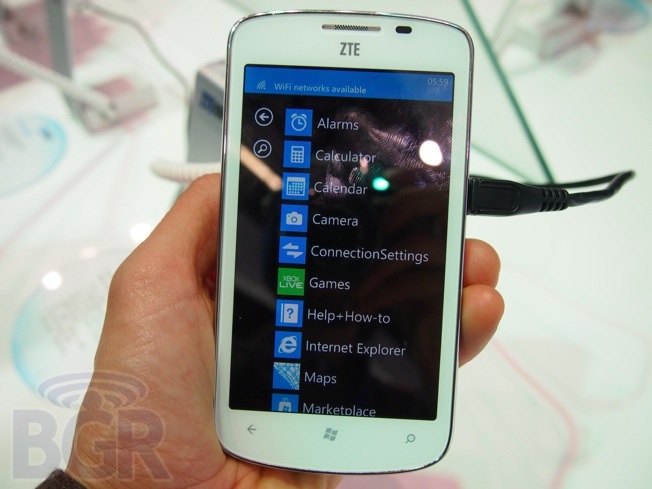
ZTE doesn't have a strong presence here in the U.S., but the vendor revealed several smartphones at this year's Mobile World Congress trade show that will be big sellers in a number of markets. The Era, Orbit and PF112 are among the new ZTE phones that will launch this year, and we spent some time with each of them on Monday. The Era and the PF112 both run Google's Android 4.0 Ice Cream Sandwich operating system, while the Orbit is a Windows Phone. The Era is a quad-core Tegra 3-powered beast with a 4.3-inch screen and high-end specs that rival any device launched here at the show. The PF112 sports an even larger 4.5-inch screen, tri-band HSPA+ and an 8-megapixel shooter. The Orbit is the company's low-end Windows Phone model, with a 4-inch display, a 1GHz processor and 4GB of on-board storage. In use, the Windows Phone-powered Orbit was definitely impressive for an entry-level smartphone, exhibiting the smooth user experience we've come to expect from handsets powered by Microsoft's mobile platform. The Android phones weren't operational, so we can't comment on their performance. We can definitely still admire their sleek designs though, so check out our hands-on gallery for photos of each of these new ZTE phones.


iPad 3 rumor roundup

If Apple's usual release schedule is to be believed (as it usually is), we're just about due for another iPad. Naturally, the rumor mill has amped up accordingly -- in fact, given the amount of news we've seen hit the wire regarding the phantom product, the only thing that would genuinely surprise us would be if Cupertino just opted to pull out of the tablet space altogether. Given the sort of sales figures the company has been seeing as of late, its seems a pretty safe bet that the company is confident that the old slate's still got a little bit of steam left in her.

Yep, the one thing we feel pretty confident in saying at the moment is that Apple most likely has a new iPad in the works and it's most likely coming fairly soon. It also seems like a pretty safe bet that the company goes with the iPad 3 name -- but hey, we've been burned there before. If the rumors flooding in from the likes of Digitimes and The Wall Street Journal are to be believed, the slate will bring with it faster internals, a higher res screen, a tapered back and a general smattering of Apple's customary pixie dust. So, what can we expect from the third iteration of the company's crazy popular slate? Not even Samsung knows for sure. 

Orange Santa Clara packs Intel power, we go hands-on at MWC 2012 (video)

Hot on the heels of Intel's big event, we've finally got our hands on Orange's Medfield smartphone. The Santa Clara is powered by the Intel Atom Z2460 1.6GHz processor, clocked at 1.6GHz. It does have 2011's Gingerbread kind of Android, but Orange is promising to bring ICS to the phone soon after launch -- in fact an Intel spokesperson told us that it's already had Android 4.0 running on these devices. There's a few differences between this and the Xolo X900 by Lava -- so we've given it a judicious investigation at Intel's big launch party. We'll be adding our hands-on video very soon, but our hands-on thoughts are after the break.

Nokia 808 PureView hands-on

Hey folks. Following Nokia's early morning press conference here in Barcelona, we got a litttttle bit of hands-on time with the freshly dropped Pureview 808. The software isn't quite finished yet, but we did get some time to play with the audio recording and camera apps. Really cool stuff, and we can definitely see other manufacturers forced to follow suit. The handset features the flagship 41 megapixel camera, a 4″ screen, 512 mb of RAM with 16GB of onboard storage,  a 1.3 Ghz single core chip,  and a loft 450 Euro pricetag. Expect to see this sucker in May. Hit the link below to check out the gallery!


Huawei unveils Ascend D quad, Ascend D quad XL and Ascend D1 Android phones

Huawei on Sunday announced the new Ascend D quad smartphone at Mobile World Congress. The company bills the handset as "the world's fastest quad-core smartphone," with its 4.5-inch 720p HD display and Huawei's own K3V2 quad-core 1.5GHz processor. The smartphone features an 8-megapixel rear-camera, 1.3-megapixel front-facing camera and runs Android 4.0 Ice Cream Sandwich. Huawei also introduced the Ascend D quad XL and the Ascend D1 smartphones. The Ascend D quad XL boasts a massive 2,500 mAh battery, but otherwise it's the sames exact smartphone as the Ascend D quad. The Ascend D1 runs a 1.5 GHz dual-core CPU and has a 1,670 mAh battery. The Ascend D quad series will be available in China, Australia, Europe, Asia-Pacific, North and South America, and the Middle East in the second quarter of 2012, with the Ascend D1 to be made available in April. Pricing and more specific information surrounding launches aren't yet available. Read on for Huawei's press release.

Huawei Introduces the World's Fastest Smartphone: The Ascend D quad

With Huawei's proprietary quad-core chip and power management system

BARCELONA, Spain, Feb. 26, 2012 /CNW/ – Huawei, a leading global information and communications technology (ICT) solutions provider, today introduced the world's fastest quad-core smartphone, the Huawei Ascend D quad. Powered by the Huawei's K3V2 quad-core 1.2GHz/1.5GHz processor and boasting the most compact design among 4.5-inch smartphones, the Ascend D quad expands the realm of possibilities for consumers with an Android 4.0 operating system and Huawei's proprietary power management system which provides up to 30% in energy savings.

"We've listened to people's top demands from smartphones: speed, long-battery life, high quality visual and audio capabilities, and a compact, lightweight handset. The Huawei Ascend D quad exceeds these expectations," said Richard Yu, Chairman of Huawei Device. "In January at the Consumer Electronics Show at Las Vegas, we achieved a world record for the world's slimmest smartphone with the Huawei Ascend P1 S. We are proud to once again introduce a world-first at the 2012 Mobile World Congress with the Ascend D quad, the fastest smartphone."

The Ascend D quad is an entertainment dynamo with its 4.5-inch 720P high definition touchscreen, and the industry's most powerful 32-bit true color graphic processor. Its PPI 330 screen providing crystal clear display even under direct sunlight, is complemented by its Dolby 5.1 Surround Sound and Audience earSmart™ voice technology for an experience which excels across the senses. Its 8-megapixel BSI rear-facing camera, 1.3 megapixel front-facing camera, and 1080p full HD video-capture and playback capabilities enables you to record your special moments in clearer, richer detail.

The Ascend D quad comes with an 1800mAh battery, which lasts for one to two days with normal usage. The smartphone's prowess is enhanced by Huawei Device's proprietary power management technology which provides a longer battery life of up to 30% compared to industry average by adjusting power consumption according to usage needs. It also ensures higher chipset performance and efficiency by maintaining a low chip temperature.

Measuring 64mm narrow and 8.9mm slim, the Ascend D quad is proof that good things do come in small packages. With an ultra-thin frame, the lightweight and compact smartphone's 4.5-inch touchscreen seems to vanish into the edge, creating an "infinity" feel and allowing an exceptionally narrow body.

In addition to innovative hardware design, the Ascend D quad also has outstanding software design. In addition to its Android 4.0 operating system, the Ascend D quad optimizes the user experience, ensuring greater ease of use.

As part of the Ascend D series, Huawei also introduced the Ascend D quad XL and the Ascend D1 smartphones. The Ascend D quad XL comes with a 2500mAh battery which provides two to three days of normal usage. With the same specifications as the Ascend D quad, the Ascend D quad XL measures 10.9 mm slim. The Ascend D1 runs on a 1.5 GHz dual-core CPU and has a 1670mAh battery.

The Ascend D quad series will be available in China, Australia, Europe, Asia-Pacific, North and South America, and the Middle East in Q2 2012. The Ascend D1 will be available in the above markets from April 2012.


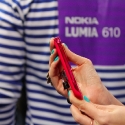
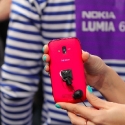
Nokia Lumia 610 hands-on

While the Pureview 808 sort of stole the show, the Lumia 610 marks a significant release as well, and something that is worth paying attention to. The decidedly downmarket Windows Phone device aims to provide the Windows Phone experience to a much wider array of folks, and we think Nokia might have a hit on their hands. The new suite of Nokia software includes a Library app, and a completely revamped Maps application. We had a chance to spend some time with the little guy, and we left generally pleased, though not overwhelmed. But, then again, we suppose that's the goal with a 189 Euro smartphone, now isn't it? Specs include 256 mb of RAM, a 3.7″ WVGA screen, a 5mp camera, and 8GB of onboard storage. Hit the gallery link below for some hands-on shots!

http://www.bgr.com/2012/02/27/nokia-lumia-610-hands-on/


Asus announces Padfone tablet/smartphone hybrid alongside low-end Transformer Pad 300

Asus on Monday unveiled the Padfone from Mobile World Congress in Barcelona, Spain. The hybrid device was first announced in May last year, however a bit has changed since the Padfone's initial announcement at Computex 2011. The unique Padfone tries to capitalize on separating itself from the pack, and is comprised of a 4-3-inch Android 4.0-powered smartphone docked inside a 10-inch tablet. The handset portion of the device features a dual-core Qualcomm Snapdragon processor, an Adreno 225 graphics processor and an 8-megapixel rear camera. Docking the smartphone inside the tablet brings the device a 10.1-inch display, a tablet UI and a new range of functionality. Announced alongside the Padfone is the entry-level Transformer Pad 300, a new version of Asus's popular Eee Pad Transformer that features a quad-core Tegra 3 processor, an 8-megapixel rear camera, a 2-megapixel front-facing camera, a 10.1-inch 1,280 x 800-pixel display and 16GB of internal storage. The Padfone will finally begin shipping in April, 11 months after it was first announced, and pricing is not yet available. Launch details for the Transformer Pad 300 have not yet been announced, but hit the break for an image of the device.

http://www.bgr.com/2012/02/27/asus-announces-padfone-tabletsmartphone-hybrid-alongside-low-end-transformer-pad-300/

Samsung announces Galaxy Note 10.1 with Android 4.0, dual-core chipset and S Pen

Samsung on Monday took the wraps off another new addition to its Android tablet lineup, the Galaxy Note 10.1. Like the supersized "phablet" it joins in the Galaxy Note family, the Note 10.1 includes Samsung's S Pen stylus for drawing, note-taking, highlighting and much more. Sadly, this still isn't the high-definition slate we've been waiting for so it looks like Samsung is shooting to launch its Retina-like tablet later this year. The 10-inch Galaxy Note runs Samsung's TouchWiz UI atop Android 4.0 Ice Cream Sandwich and includes a 1.4GHz dual-core processor along with the same cameras found in the original Galaxy Tab 10.1. In fact, the Note 10.1 essentially seems like a redesigned Galaxy Tab 10.1 with an S Pen and a new processor, which is peculiar since the Galaxy Tab 2 (10.1) is pretty much a Galaxy Tab 10.1 as well. Announced alongside the Galaxy Note 10.1 is the Galaxy S WiFi 4.2, a Wi-Fi-only device aimed at gaming. Samsung's press releases follow below.

Boost your Creativity and Productivity with GALAXY Note 10.1

A new device category, GALAXY Note 10.1 comes with an immersive 10.1'' screen and S Pen versatility to unlock your creativity and productivity

Barcelona, February 27, 2012 – At Mobile World Congress, Samsung announced the launch of GALAXY Note 10.1, which expands the GALAXY Note experience in creativity, productivity, and learning.

With its large display, GALAXY Note 10.1 provides multi-screen functionality to maximize efficiency in learning, work and creative endeavors. Its multi-screen functionality enables you to do a true multi-tasking, by viewing Internet pages, videos or other applications side by side while writing or sketching your ideas.

GALAXY Note 10.1 features S Note, a unique and efficient tool that lets you combine notes or sketches together with web content, images and other digital media into your own personalized storyboards. It gives you a new way to create stories as S Note provides various ready-to-use templates such as meeting minutes, recipe, cards, diary, magazine and more. Also, hand-drawn geometric shapes can be perfectly digitized by using the Shape Match function, which helps users to create more organized idea sketches and storyboards.

Moreover, by using the S Note's integrated knowledge search engines, users can quickly search, obtain information, and easily drag & drop the cropped images and content onto S Notes without having to switch between screens.

GALAXY Note 10.1 enables an extraordinary learning experience. Students can watch a lecture live-streamed on video while writing down comments on S Note; research a college essay on the web while taking notes; or even read a full e-textbook while annotating it. Similar to the Shape Match, Formula Match function helps to correct and digitize formulas hand-drawn with S Pen, making the device a more powerful education tool.

Users can fully enjoy PC-like premium photo editing and drawing experiences with Adobe® Photoshop® Touch and Adobe Ideas. Photoshop Touch lets users transform images with core Photoshop features and combine multiple photos into layered images, make popular edits, apply professional effects, and more. Adobe Ideas is an easy-to-master drawing tool that allows users to sketch ideas, choose amazing color themes and import images. Both are specially optimized for S pen and are exclusively pre-loaded on Samsung GALAXY Note 10.1.

"GALAXY Note 10.1 takes productivity on a Note to a whole new level. With a larger, fully utilizable screen and superior performance, it combines the intuitiveness of handwriting with all the versatility of digital content to let users be more productive across all of life's demanding tasks—whether working, learning, or simply creating their own stories," said JK Shin, President of IT & Mobile Communications Division at Samsung Electronics. "With GALAXY Note 10.1 we are demonstrating Samsung's commitment to extend the mobile category and are working with key partners like Adobe to provide extraordinary experiences for users that enable them to be more productive, express themselves creatively and add a touch of fulfillment to their lives."

Ensuring intuitive multitasking and web browsing, GALAXY Note 10.1 runs on AndroidTM 4.0 (Ice Cream Sandwich) and features a 1.4GHz dual-core processor and HSPA+ connectivity. Its real-time video streaming and Full HD video playback add to the device's content versatility.

GALAXY Note 10.1's innovative S Pen, the most advanced pen input solution on the market, is completely integrated into the device's original applications. It provides enhanced pressure sensitivity, superior accuracy and control when editing or writing, providing an analog pen writing experience on a digital device.

The GALAXY Note 10.1 is exhibited at Samsung stand (Hall 8), Mobile World Congress 2012. For multimedia content and more detailed information, please visit www.samsungmobilepress.com.

Note to Editors:

Samsung GALAXY Note 10.1 Product Specifications

Network  HSPA+ 21Mbps 850/900/1900/2100EDGE/GPRS   850/900/1800/1900
Processor 1.4 GHz Dual-Core Processor
Display  10.1" WXGA(1280×800) PLS TFT
OS Android 4.0 (Ice Cream Sandwich)
Camera Main(Rear): 3 Megapixel Auto Focus Camera with LED FlashSub(Front): 2 Megapixel Camera
Video Codec: MPEG4, H.263, H.264, VC-1, DivX, WMV7, WMV8, WMV9, VP8Format: 3GP(MP4), WMV(ASF), AVI, FLV, MKV, WebMPlayback/ Recording: 1080p Full HD@30fps, 720p HD@30fps
Audio Codec: MP3, OGG, WMA, AAC, ACC+, eAAC+, AMR(NB,WB), MIDI, WAV,AC-3, FlacMusic Player with SoundAlive

3.5mm Ear Jack

Value-addedFeatures &
Services
Samsung TouchWiz / Samsung L!ve Panel
S Pen Experience (S Note, S Planner)
Samsung Apps
Samsung Hub- Readers Hub/ Music Hub/ Game Hub/ Video Hub
Samsung S Suggest (App recommendation service)
Samsung ChatON mobile communication service
Samsung AllShare Play*
Samsung Kies/ Samsung Kies air
GoogleTM Mobile Services- Android Market™, Gmail™, YouTube™, Google Maps™,Syncing with Google Calendar™, Google Search, Google +
Adobe Apps- Photoshop Touch, Adobe Ideas
Polaris document editor
A-GPS(3G version)S-GPS(WiFi version)Glonass
EnterpriseSolutions Exchange ActiveSyncOn-Device EncryptionCisco VPN(Virtual Private Network)

Juniper Junos Pulse VPN

Connectivity Bluetooth technology v 3.0 (Apt-X Codec support)USB 2.0 HostWi-Fi 802.11 a/b/g/n (2.4 & 5 GHz), Wi-Fi Direct, Wi-Fi Channel Bonding
Sensor Accelerometer, Digital compass, Light, Gyroscope
Memory 16/32/64GB User memory + 1GB (RAM)microSD (up to 32GB)
Dimension 256.7 x 175.3 x 8.9 mm, 583g
Battery  Standard battery, Li-ion 7,000mAh

* Availability and launching time of the services may differ by region.

* All functionality, features, specifications and other product information provided in this document including, but not limited to, the benefits, design, pricing, components, performance, availability, and capabilities of the product are subject to change without notice or obligation.

Game On With Samsung GALAXY S WiFi 4.2

Samsung introduces GALAXY S WiFi 4.2, the best of Android experiences with powerful gaming on the go. This experience is further enhanced with the device's superior SoundAlive audio system, offering great sound either through a front stereo speaker or headphones. A gyroscope sensor enables the user to control the device by moving it, providing truly engaging and intuitive gaming.

The GALAXY S WiFi 4.2 is exhibited at Samsung stand (Hall 8), Mobile World Congress 2012. For multimedia content and more detailed information, please visit www.samsungmobilepress.com.

Samsung GALAXY S WiFi 4.2 Product Specifications

Processor 1 GHz Processor
Display  4.2" WVGA(480×800) IPS TFT
OS Android 2.3(Gingerbread)
Camera Main(Rear): 2 Megapixel CameraSub(Front): VGA for Video Call
Video Codec: MPEG4, H.263, H.264, VC-1, DivX, WMV7, WMV8, WMV9Format: 3GP, ASF, AVI, MP4, WMV, FLV, MKVPlayback/ Recording: HD@30fps, VGA@30fps
Audio Codec: MP3, AAC, AC-3, AMR, FLAC, WMA, WAV, OGGMusic Player with SoundAliveFront Stereo Speaker

3.5mm Ear Jack

Value-addedFeatures &
Services
Premium EA Games preloaded- Need For Speed Hot Pursuit
Samsung Apps
Samsung Hub- Social Hub- Readers Hub*/ Music Hub*/ Game Hub* (Downloadable via Samsung Apps)
Samsung ChatON mobile communication service
Samsung Kies / Samsung Kies air
Samsung AllShare
Samsung SmartView: Smart TV remote control application
GoogleTM Mobile Services- Android Market™, Gmail™, YouTube™, Google Maps™,Syncing with Google Calendar™, Google Search, Google +
Bluetooth Handsfree
Connectivity Bluetooth technology v 3.0USB 2.0Wi-Fi 802.11 b/g/n
Sensor Gyroscope , Accelerometer, Digital compass
Memory 8/16GB User memory + 512MB (RAM)microSD (up to 32GB)
Dimension 124.1 x66.1 x 8.9 mm, 118g
Battery  Standard battery, Li-ion 1,500mAh

* Availability and launching time of the services may differ by region.

* All functionality, features, specifications and other product information provided in this document including, but not limited to, the benefits, design, pricing, components, performance, availability, and capabilities of the product are subject to change without notice or obligation.


Samsung Galaxy Beam hands-on

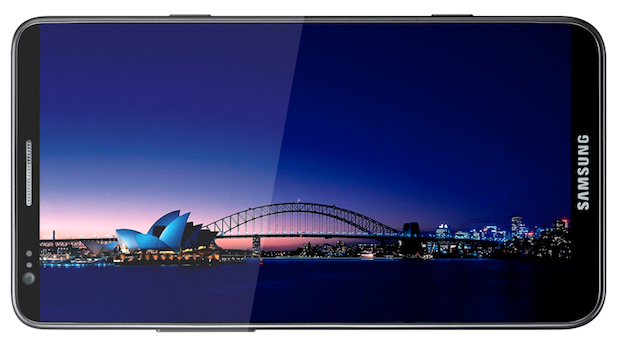
A projector phone? From Samsung? Sure, why not? We got a chance to spend some time with Sammy's newly announced "Beam" addition to its ever-expanding Galaxy line, and we left with mixed emotions. On the one hand, this is a solid and well executed smartphone, but it sports a 1Ghz dual-core chip, Android 2.3, a 4-inch WVGA screen, 8GB of built-in storage, and 768MB of RAM, so the specs aren't exactly on par with other modern handsets. On the projector end of things, we've got a powerful 15 lumens unit capable of displaying a 50-inch wide image on any flat surface. This is pretty cool, but we're still not sure this is a space that needs filling. That said, if you're in the market for a projector-equipped smartphone, this is pretty much the best game in town. Our hands-on photo gallery follows below.


Samsung Galaxy Note 10.1 hands-on

Somehow making the original Galaxy Note look positively diminutive in size, the newly announced Galaxy Note 10.1 is a proper 10.1-inch tablet from Samsung. Sporting a 1.4Ghz dual-core processor, 1GB of RAM, HSPA+, Wi-Fi and Bluetooth 3.1, the only thing you won't be able to do with this slate is place an actual call. Then again, given how ridiculous the original Note looks held up to the side of a human head, we're not so sure this is a bad thing. In use, the Note 10.1 is snappy and responsive, and the S-pen implementation is well executed. Does the world need another 10-inch tablet? We can't answer that one way or the other, but Samsung certainly has a competent device on its hands. Check out the gallery below for some hands-on pics!


Samsung Galaxy S III full specs: 1.5GHz quad-core, 1080p display, ceramic case

We reported some exclusive details surrounding Samsung's upcoming flagship Galaxy S III smartphone this past weekend, and now we have received some more information that helps us paint a more complete picture. And as that picture becomes more clear, this sure looks like the baddest Android smartphone the world hasn't yet seen. We reported that the new Samsung flagship would launch in a simultaneous fashion across the globe, but we now have some more detailed specifications to report. Ladies and gentlemen, here is the Samsung Galaxy S III:

  • 1.5GHz quad-core Samsung Exynos processor
  • 4.8-inch "full HD" 1080p resolution with 16:9 aspect ratio display
  • A 2-megapixel front-facing camera and an 8-megapixel rear camera
  • Ceramic case
  • 4G LTE
  • Android 4.0

As always, we'll keep pounding our sources for more information, but we have to say… a Blu-ray display? On a smartphone? We'll cuddle up with that and some popcorn any night of the week.

http://www.bgr.com/2012/02/27/samsung-galaxy-s-iii-full-specs-1-5ghz-quad-core-1080p-display-ceramic-case/

Nokia Asha 202, 203 and 302 hands-on

Nokia's Asha series aren't going to distract buyers looking at the Lumia 900, but for bringing smartphone-style tech down to the feature phone level they're impressively cheap, flexible devices. A combination of a new, more HTML5 capable browser, Microsoft Exchange email support on the Asha 302 and dual-SIM support on all but the 203, it's another sign of Nokia pushing what would traditionally be smartphone functionality into the sub-€100 segment. Check out more hands-on after the cut.

The Asha 302 is probably the most cohesive of the three designs, with a keyboard that seems to be carried over from the well-esteemed Nokia E6. It's good for quick messaging and punching out a brief email, though you don't get a touchscreen; if you want that, you'll have to make do with a numeric keypad and either the Asha 202 or 203.

The touchscreen is the only real luxury element of the Asha 202/203, with the 2-megapixel camera being relatively mundane in comparison to what we've seen on other Nokia devices. Still, for €69, it's an ambitious device, especially the dual-SIM 202 model.

Still, whereas not that long ago devices in this price bracket would struggle to do more than make calls and send the odd SMS, Nokia is progressively turning them into mini-smartphones. The maturation of S40 is only going to increase when Nokia brings the team from acquisition Smarterphone onboard; Nokia won't be specifically using Smarterphone OS , but instead using its creators' expertise to boost S40, smart devices chief Ilari Nurmi told SlashGear today.

ASUS Transformer Pad Infinity 700 LTE official [Hands-on]

The ASUS Transformer TF700 that was first shown off at CES is finally official. Coming to market later this year as the ASUS Transformer Pad Infinity 700 series. While the specs basically remain the same we do have one key difference here. ASUS announced one additional model will come to market with the 1.5 GHz dual-core Qualcomm S4 and 4G LTE. See the official specs and hands-on below.

According to the press sheet the Infinity 700 will come with two variations. A quad-core NVIDIA Tegra 3 powered WiFi only edition, as well as the dual-core 1.5 GHz S4 powered by Qualcomm rocking 3G/4G LTE capabilities. Other than those key differences everything else remains the same and this tablet looks amazing in person. Seriously pictures don't do justice for the 1920 x 1200 full HD display they've manage to pack into this slate.

If you missed our hands-on video from CES check it out below as we demo some live gaming on the high resolution tablet. Now just to confirm the specs we have a 10.1″ 1920 x 1200 resolution full 1080p HD tablet — covered in Corning Gorilla Glass 2. This should be one of the first to be protected by the second generation of Gorilla Glass. Running on Android 4.0 Ice Cream Sandwich it comes complete with either of the two processors mentioned above, 1GB of RAM, and 32/64GB of internal storage versions will be available — as well as that impressive 8 megapixel camera around back with a fast F/2.2 stop for amazing photos.

Sadly one complaint I have with the Infinity is the same one we had with the Prime from our review. The device only has a single speaker grill on the back even though ASUS is claiming excellent sound with their SonicMaster technology inside. The grill is located right where you'd hold the tablet and will most likely suffer from the exact same muffling problem the Prime does.

Other than that minor oversight the Transformer Pad Infinity 700 is another excellent tablet coming from ASUS and we can't wait to enjoy some true HD gaming on that 1920 x 1200 resolution display. Unlike the others ASUS did not have further pricing or release date details but previous reports suggest a Q2 launch.

Would you ditch the quad-core power for the portability of having 4G LTE with the Qualcomm model? Let us know in the comments.


Sent with MobileRSS HD


Sent from my iPad

Nokia’s 808 PureView blows away the competition with massive 41MP camera

You read that right. Nokia just announced the 808 PureView here at the Mobile World Congress, and it sports an astoundingly large 41 megapixel camera.

Nokia is well aware that such large resolution pictures will be difficult to share, so the phone will oversample pictures to a size roughly around a 5 megapixel picture. That means better picture quality without scary file sizes. And if you do dare to take a picture at the full resolution (which is actually 38 MP), you'll be able to zoom into the picture after the fact without losing much detail.

The 808 PureView runs Nokia's Belle OS, which could be a disappointment to those expecting yet another new Windows Phone from the company. Jo Harlow, Nokia's head of smartphones, said that the company will eventually bring its PureView technology to future phones. We can consider the 808 PureView a practice run for the tech, and a new lustworthy device for Nokia fanatics.

The phone features a 4-inch display and a 1.3 gigahertz processor. We expect to hear more about how this phone's magical camera works in the future. In comparison, the iPhone 4S, and most other high-end smartphones, feature 8-megapixel cameras. The 808 is interesting, but I'm far more curious what PureView will look like once it hits future phones.

The Nokia 808 PureView is expected to ship in May for €450. No word on a U.S. release yet.

Top Photo/Devindra Hardawar

Intel delays next-generation Ivy Bridge processor for laptops

A senior Intel executive confirmed an earlier report that the company's code-named Ivy Bridge laptop microprocessor will be delayed from the spring until June.

Sean Maloney, executive vice president of Intel, said in an interview with the Financial Times that the 22-nanometer microprocessor will not ship in April as had been expected by analysts and computer makers.

DigiTimes reported on Feb. 16 that Intel had told computer makers to expect a delay in initial shipments of the processors, which will be used in Ultrabook laptops, which are thin and light high-performance machines that resemble Apple's MacBook Air. Ten days ago, Intel declined comment, saying that Ivy Bridge was "on track for our spring 2012 launch, in line with previous guidance."

It's not clear why Intel waited this long to publicly confirm what computer makers had already been told. But Intel had never given a precise date for the mass shipments except to say spring. It's quite a stretch to say that June shipments amount to a spring launch.

"I think maybe it's June now," said Maloney to the Financial Times.

Intel plans a huge marketing campaign around Ultrabooks, but DigiTimes said that Intel will only ship a small volume of the processors in early April and mass shipments are not expected to occur until after June.

One of the reasons, DigiTimes said, is that the weaker economy has slowed demand for notebook computers, leaving computer makers with excess Sandy Bridge processors. The delay of the mass shipments will help minimize the impact on computer makers with big inventories.

Ivy Bridge is the successor to Intel's Sandy Bridge family of chips, and it could be used in a wide variety of computers from laptops to servers. Intel has yet to comment on the Financial Times story.


Filed under: mobile


Sent with MobileRSS HD


Sent from my iPad

Twitter Delicious Facebook Digg Stumbleupon Favorites More

 
Design by NewWpThemes | Blogger Theme by Lasantha - Premium Blogger Themes | New Blogger Themes