Huawei unveils Ascend D quad, Ascend D quad XL and Ascend D1 Android phones.
Asus announces Padfone tablet/smartphone hybrid
Asus on Monday unveiled the Padfone from Mobile World Congress in Barcelona, Spain. The hybrid device was first announced in May last year, however a bit has changed since the Padfone's initial announcement at Computex 2011. .
Samsung announces Galaxy Note 10.1 with Android 4.0
Samsung on Monday took the wraps off another new addition to its Android tablet lineup, the Galaxy Note 10.1. Like the supersized "phablet" it joins in the Galaxy Note family, the Note 10.1 includes Samsung's S Pen stylus for drawing, note-taking, highlighting and much more..
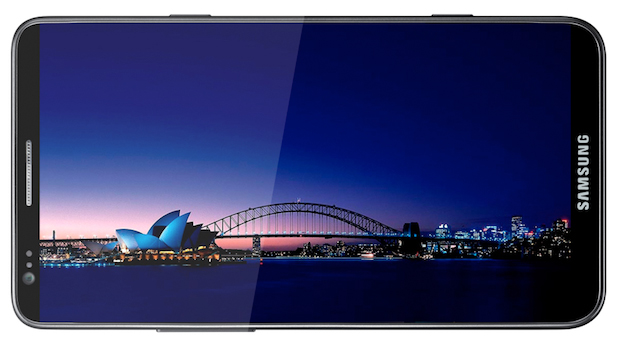
Samsung Galaxy S III full specs
We reported some exclusive details surrounding Samsung's upcoming flagship Galaxy S III smartphone this past weekend, and now we have received some more information that helps us paint a more complete picture. And as that picture becomes more clear, this sure looks like the baddest Android smartphone the world hasn't yet seen. We reported that the new Samsung flagship would launch in a simultaneous fashion across the globe, but we now have some more detailed specifications to report. Ladies and gentlemen, here is the Samsung Galaxy S III.
Motorola's quirky square-shaped Android 2.1 creation has just become official, courtesy of the company's YouTube channel.The Flipout brings a 2.8-inch, 320 x 240 screen (Kin killer!), a 3 megapixel camera with "one-touch" uploads to Facebook, MySpace and photo-hosting sites, and a refreshed implementation of Motoblur, which now includes resizable widgets, feed filters, and push corporate email. We hear that last feature is a real must-have with the target audience of this device.Video of the Flipout can be found just after the break, and Euro readers can expect it imminently, as the listed Q2 2010 launch date basically means it'll be out by month's end. Wonder how they'll price a curious creature like this.
Update: Our pals at Recombu got a quick hands-on with the Flipout, and... it's a square Android phone. Video after the break.
Update 2: We've come across a more comprehensive spec sheet on Moto's dev site, which lists AT&T- and Rogers-compatible 3G bands, make of that what you will.
Of all the surprises we expected to hear about in the WWDC keynote, a multitouch trackpad peripheral didn't exactly pop into our brains. But -- whoomp -- here it is. What we appear to be looking at is a brand new input device that Apple has dreamed up which connects to desktops (and laptops, if you like) via Bluetooth, much like the Apple Keyboard. If you take what you see in the photos at face value, it would seem that the folks in Cupertino are making a play for finger-based input in a big way -- taking the work they've done on Mac laptops and the iPhone, iPod touch, and iPad, and translating it to the desktop realm. This weirdly lines up perfectly with rumors from earlier in the year, emanating from both John Gruber (of Daring Fireball fame), and MacRumors -- the former reporting that Apple was set to release a "Mentioned-Nowhere-Else-But-in-This-Very-Headline Multi-Touch Trackpad Gadget for Desktop Macs," and the latter taking notice of an Apple trademark application for the "Magic Trackpad." It certainly all makes sense given that the company has made not-so-subtle moves away from standard input devices to finger-friendly options in many, many of its recent products. Whatever the case may be, we're potentially just hours away from the truth, so feast your eyes on the photos, and get ready for the big reveal.
Update: New images received with a claim that the device supports handwriting recognition in addition to "every feature you can find on a Magic Mouse (and possibly features of a MacBook Pro trackpad)." This, from a person who claims to be personally testing it. Something we hope to do for ourselves before the day is through.
Update 2: Reader Dan Berte made a quick little cardboard mockup using his Apple keyboard and Magic Mouse for relative sizing and he's estimating the tracking area to be around six inches diagonal.
We've just learned at D8 today that Dell will be offering the Streak to US customers direct from its website -- unlocked -- starting next month for $500. That's later than the June 4 date that UK customers will be enjoying, but it's earlier than it could've been -- Dell had merely been giving "later this Summer" guidance previously. More on this as it develops!
Oh, hello WindPad! MSI just took the wraps off its 10-inch, Windows 7 tablet during the company's Computex press conference. The tablet is powered by a 1.66GHz Intel Atom Z530 processor, 2GB of RAM, and packs a 32GB SSD that boots Windows 7 Home Premium, though MSI has created a Wind Touch UI layer. While they were showing early prototypes, it will have two USB ports, an HDMI and a webcam when all is finalized. According to an MSI product manager on hand, the WindPad 100 will hit the market later this year for around $499. We just caught a few minutes with the tablet so hit the break for some early impressions and a short hands-on clip. MSI WindPad 100 hands-on
The 10-inch tablet is made entirely of plastic -- it does feel quite cheap, but on the other hand it's incredibly light (it's only 1.7 pounds). The prototype they had out didn't have any of the final ports, but eventually it will have an HDMI jack that should be able to output 720p video to an HDTV. Our biggest concern about the tablet comes with the speed. We noticed it taking a few seconds for applications to launch, and the Wind Touch UI was incredibly sluggish. Speaking of the interface, it's just a basic skin on top of Windows and should provide easy access to applications. The 1024x600-resolution capacitive display did seem responsive, though we would have rather it had a higher resolution.
You heard it here first, folks. Google has just come out with the strident claim that the web browser in Android 2.2, aka Froyo, is the world's fastest for mobile devices. Having implemented the V8 JavaScript Engine that's already made an appearance in its desktop Chrome browser, Google's reporting JavaScript performance that's somewhere in the vicinity of two to three times better than what you can get from previous Android versions. We'll give this geek cabal some style points for the double equals sign up top, but will certainly be putting its bold assertion to the test in the very near future.
Sure sure, Froyo is great and all, but Google just blew our minds with two previews of upcoming Android features at I/O: OTA application installation and remote music streaming. OTA installation is just as simple as you'd expect -- after browsing to an app on your desktop, you can push it to your phone and install it with just a single click, all done over the air. Interestingly, Google also showed music being purchased and transferred from Android Marketplace in the same way, which could indicate a deeper push towards music integration, or just be a nice demo. Either way, it's pretty slick stuff -- the fewer wires we have to carry, the better.
The remote music streaming is a little crazier: Google bought a company called Simplify Media, which makes a bit of desktop software that can stream all your music directly from iTunes to your phone. The demo was quite slick -- you just open the app and push "all," and all your music is instantly available. Whether or not this'll work over 3G or be limited to the local network is still up in the air, but we're dying to try it out.
As expected, Google just announced Google TV at I/O. There's four billion TV viewers worldwide, making it the biggest market in the world, and Google's after it in a big way -- it's a $70 billion ad market in the US alone, after all. According to Google, "video should be consumed on the biggest, best, and brightest screen in your house, and that's the TV." The idea is to merge the web and TV without compromising on either the web experience or the video experience, with a focus on discovery and personalization. Of course, since it's Google, the interface is search-driven, so you can just type in things like "30 Rock" or MSNBC" to find channels and content -- including upcoming content to record and content from the internet. Yeah, it's kind of like the TiVo Premiere's swivel search, but prettier -- and there's a Hulu logo on the screen, which is extremely intriguing.
Google's not sharing hardware specs, but we're told Google TV devices will have WiFi, HDMI, the Intel CE4100 processor, and... some will have an IR blaster to tune your cable or satellite box, which is just sad. (Like, 1997 sad.) The input devices will all have keyboards, and you'll also be able to use Android devices as a remote, including using voice search to find content and sending content from the phone to the TV. The software is based on Android with Chrome as the browser and full Flash 10.1 support. Since it's Android, there's a version of Android Market -- any app that doesn't require phone hardware can run on Google TV. There will also be a Google TV-specific Android SDK launching in "early" 2011, along with the Android Market for Google TV.
As for partners, it's just as we heard: Sony will launch Sony Internet TVs and Blu-ray players with Google TV in the fall, and Logitech will introduce a set-top box with a Harmony remote and an HD camera for video chat at some point in the future. Dish Network will also launch a Google TV box at some point, while Best Buy will promote the platform as a whole in-store.
Sony will be first out of the gate with a Google TV powered device, with its "Sony Internet TV" devices -- in the form of either an HDTV or a set-top box with Blu-ray player -- arriving on shelves this fall. The rest of the partners were just as the rumors indicated, with Logitech adding a QWERTY Harmony remote, "companion box" to bridge the gap to existing home theater equipment and eventually video chat capabilities, Intel providing the CE4100 Atom processor at the heart of the devices and an Android 2.1 OS with Chrome browser brings it all together. DISH Network and Google have admitted to their ongoing trials but there's no word on any release date,(Update: We didn't catch it onstage, but DISH just announced it will enable "advanced integration" via HDMI on all of its HD DVR receivers this fall, details after the break) while Best Buy is already on board to sell all of this and inevitably offer to hook up those IR blasters for a fee, while Adobe is just happy to see another device that runs Flash 10.1. The rest of the details are in press release and video form after the break, but you can sign up for updates at Google.com/tv (developers check in here) or check out our ongoing liveblog right from Google I/O.
Update: Vic Gundotra just confirmed in a post-keynote press conference that TV will go international next year.
Dashing away from the Google I/O keynote as fast as our feet would carry us, we scored the very first look at Logitech's Google TV companion box. While we'll share full details when we catch a breath, here's the scoop: the box extends the full functionality of a Logitech Harmony remote and a WiFi access point to your TV, providing not only Google TV but also allowing you to control your entire entertainment system (including DVR) with a still-in-development keyboard / touchpad remote or an iPhone or Android smartphone app over WiFi. Hit the gallery below for a taste of what the little set-top box can do, and rest assured we've got more info on the way.
Logitech's Google TV Companion Box hands-on
When we got to Logitech's demo space, we expected to see a keyboard and mouse. To our surprise, the Logitech product manager pulled out a Nexus One and iPhone. He explained that the companion box has all the technology of Logitech's $400 Harmony 900 remote and extends it to your handset over WiFi. Several scrollable pages of dedicated buttons let that particular iPhone control not only the Google browser but also a Samsung TV, Onkyo receiver and TiVo set top box, and the product manager showed us that there were three additional control schemes (including a touchscreen D-pad, gesture swipe pane and virtual keyboard) that could be activated simply by shaking the phone. Should you not have a more modern smartphone, it won't be your only option by far -- the box will have an optional RF keyboard / touchpad available at launch, and a pair of USB ports in back allow users to connect dongles for 2.4GHz peripherals. In addition to standard Google TV functions, Logitech said the box would come with a 1080p video chat solution called Vid.
The unit itself is based on Intel's CE4100 "Sodaville" Atom processor, with this particular chip operating at 1.2GHz, and the board features 4GB of memory and 802.11n WiFi. In addition to the aforementioned twin USB sockets, the rear I/O panel features wired LAN jack and two IR headers for additional connectivity, and has a pair of HDMI 1.3 ports that handle all visual content, with Dolby 5.1 surround transferred via either HDMI or S/PDIF out. If your home entertainment setup is entirely wired with HDMI, you'll find the unit allows full digital passthrough; if your sources use any other kind of jack (component, composite, etcetera) you may need a receiver of some sort; reps available couldn't tell us if the box required HDCP to stream content.
Interested to know how you were gonna fill up that Chrome OS app page? Google just announced its new online web app store at I/O. So far they've shown off Dark Room for image editing, a pretty slick version of TweetDeck, and yes, like every other platform known to man, there's Plants. vs. Zombies and Lego Star Wars. Paid-for software will be offered -- Dark Room is $4.99, if you want to go ahead and put that money aside. No word on a launch date, but we'll keep pushing for more. We were just shown a demo of Sports Illustrated's interactive magazine, and we gotta say, it's mighty impressive -- embedded video, fully searchable, and some pretty clever tricks with geolocation that frankly exceed most anything we've seen on the iPad thus far. The web store -- for Chrome and Chrome OS -- will hit the dev channel "soon."
Everyone's favorite WiMAX-powered Android device finally has a date and a price, and you don't have terribly long to wait: June 4 is the date that you'll want to be lining up outside your local Sprint store for an EVO 4G, $199 in hand (assuming you're signing up for a new contract, of course -- according to the fine print, the full cost is $450 before all discounts). Interestingly, Sprint has specifically called out that you'll be able to video chat (remember, the EVO 4G has a front-facing cam) over both 3G and 4G using Qik -- not a bad choice, considering the company's well-established expertise with streaming live video out of handsets.
Unfortunately, there's a downside to all this: customers will be paying a mandatory (as confirmed to us by Sprint reps) $10 per month "Premium Data add-on" on top of their plan -- ostensibly for the privilege of enjoying WiMAX when they're in a Sprint 4G market -- and the 8-device WiFi hotspot feature runs an extra $29.99 a month, which Sprint is quick to point out is half what you'd pay for a dedicated mobile broadband account. As we saw at CTIA, the phone is the first to offer on-phone YouTube high quality video, a feature that automatically kicks in when you're in the sweet confines of a WiMAX tower. Oh, and check this out: Sprint was hesitant to commit to offering simultaneous voice and data before, but HTC must've worked out the kinks, because it's all systems go -- you'll be able to yap and browse on 4G at the same time.
We're at the EVO 4G's announcement in New York as we type, and we can tell you that everything Sprint is demoing is crazy fast -- we'd expect no less from an WiMAX device with a 1GHz Snapdragon -- and we're particularly stoked to see them demo Need For Speed Shift on it, which will be launching on Android around the same time as the device. Follow the break for Sprint's full press release!
Update: According to Phone Scoop, that $10 premium add-on has the benefit of no data cap for either WiMAX or 3G connections. Since we're on the subject of updates, have you seen our bevy of new EVO 4G videos yet?
Update 2: Starting today, Best Buy is accepting pre-orders for the device, and per usual, they won't require you to wait for the mail-in rebate -- it's just $199.99 straight-up on contract.
Although Google launched the Nexus One with grand plans to radically change the way consumers purchased phones and service, it looks like the experiment has fizzled to an end -- the company just announced that will eventually stop selling handsets online and instead partner with carriers to sell the N1 in-store while using its website to promote "a variety of Android phones available globally." Google says customers simply want a hands-on experience before buying a phone, but we'd say the lack of subsidies from any carrier except T-Mobile and some serious customer service issues probably played in killing Google's original sales strategy -- and of course, both Verizon and Sprint essentially refused the N1 in favor of the bespoke Incredible and EVO 4G. We'd also say that Android as a whole will remain unaffected, since the Nexus One was never a huge seller, but it's still rare that a company simply gives up a business model like this, and we don't know if Google will ever follow up with a successor to the Nexus One. The Google Phone is dead, people -- long live the Google Phone.
Update: We just asked Google about future devices and support for current Nexus One owners, here's what they said:
On the future: We will continue working with our partners to bring cutting-edge new Android handsets to market, but we have nothing to announce right now.
On support: This announcement doesn't have any immediate impact on support for consumers who purchase Nexus One through the web store.
The kids at Taoviet have really outdone themselves. From the looks of these images, the Vietnamese site has nabbed an honest to goodness 4th generation iPhone -- a 16GB model to be exact. It's clearly pre-production judging by the XXX placeholders on the backside stamp and likely lacks a bootable OS, just a "Bonfire" test routine. Nevertheless, it looks authentic enough that we expect Apple's henchmen to be busting down the guy's door before he pries it open to reveal Apple's chipset of choice. A few more pics in the gallery.
Update: We've spotted a difference from this model and the unit that Gizmodo bought. Notably, the pair of screws at the bottom of the device are gone. The cleaner design could indicate a newer prototype (closer to the actual retail model) though both the iPhone 3G and 3GS went to market with a similar pair of screws. Comparison shot after the break.
Update 2: Oops, too late Apple, teardown pics added showing an Apple branded processor. Note the black "N90" text on the white sticker -- that's the rumored internal codename for Apple's next generation GSM iPhone. Yeah, that looks like the A4 processor to us.
Update 3: Video! Unfortunately, this sucker's never going to boot to the OS. And if the translation in our comments is correct then the unit was purchased for US$4,000.
See the marking on that chip with the Apple logo. No, not the "N90" codename indicating that it's from Apple's next generation GSM iPhone, the other text. If we're not mistaken then we're seeing "339S0084" on that chip from today's fourth-generation iPhone teardown. Guess what? According to Chipworks, that's the Apple A4 microprocessor fabricated by Samsung and the presumed work of Apple's acquired PA Semi and Intrinsity engineers. The "APL0398" text is also the same as that found on the iPad's speedy and power sipping A4 system-on-chip. The other markings differ however. What that means isn't entirely clear yet but we're digging.
We had a hunch that LG's Android 2.1-based Ally would see its first customers on May 20th, and Verizon Wireless has finally opened up and confirmed as much this morning. The Iron Man 2-infused smartphone -- which we spent some time with yesterday -- will be available in all VZW stores beginning May 20th, with pre-orders going live for phone and web customers tomorrow. We've already given you the rundown when it comes to specs (they're after the break for those with memories shorter than their shoelaces), but now we're able to confirm that it'll sell for $99.99 after a $100 mail-in rebate and a new two-year contract. A well-specced Android smartphone for under a Benjamin? Not bad, LG.
We knew it was coming end of May, now we have a date: May 28th and up for pre-order on May 10th. That's when the iPad will hit Australia, Canada, France, Germany, Italy, Japan, Spain, Switzerland and the UK. It lands in Austria, Belgium, Hong Kong, Ireland, Luxembourg, Mexico, Netherlands, New Zealand and Singapore in July. Sorry, still no pricing. Full press release after the break.
Update: Tax-inclusive pricing is out. Très cher! Oh, and Orange UK has fessed up to pricing details for the iPad 3G + WiFi.
Here she is, folks -- Dell's first-ever Android device destined for a Stateside release, and AT&T's second overall handset (the first being the Backflip) with a Google-based operating system. At CTIA's MobileFocus event, we were able to brush up against a fully functional Aero (shown beside a Mini 3, just for your information), but we left without seeing the actual home screen. The closest we came to witnessing Android 1.5 boot up was the typical AT&T intro screen, and once that popped up, our presenter promptly popped the battery out in order to stop what would've otherwise been a truly momentous occasion. We begged and pleaded for a few interface shots, but Dell insisted that AT&T was holding an invisible gun to its head in order to keep the screen dimmed. We were told that the interface was still being tweaked, and the carrier simply wasn't ready for the world at large to take a peek.
Outside of that, we learned that this will indeed be the planet's lightest Android phone ever when it ships (believe us, it was light), and while v1.5 will be onboard, Dell seemed confident that 2.1 (and beyond) would be made available shortly after launch. We were also told that it would ship with a 5 megapixel camera (a step up from the Mini 3's 3 megapixel shooter), an undisclosed amount of internal storage, a new color / design scheme (the one you see here will be the only shade available at launch) and a 2GB microSD card bundled in at purchase. You'll also find a good deal of AT&T baked into the OS, but it's not like you should be surprised to hear of carrier meddling. Finally, we were informed that pricing would be set by AT&T, and that it would be shipping "soon" -- far sooner than "six months from now" -- from both AT&T and Dell channels (though not available unlocked from the latter). There's also the possibility that Dell could arrange some sort of Aero / Mini 10 combo deal for those looking to really sink their teeth into a hefty AT&T contract, but there's nothing substantial to go on just yet in that department. Enough chit-chat -- give the gallery below a look to see what's coming your way. Source
The saga of the Milestone's firmware update to Android 2.1 is finally over for one more territory. The United Kingdom is today awaking to the news that Motorola has made the freshest Eclair available to its loyal British users, with the download already awaiting those eager to be surfing along the cutting edge of Android innovation. What else do you need to know, it's the finest software Google has to offer for your phone and it's downloadable at the source link -- get going!
We'd heard through the grapevine that the engineers at Round Rock were working on a number of slates to fill the Streak lineup, but man, we didn't see this coming... at least not yet. A couple of images along with an internal Dell announcement landed on our virtual doorstep this fine morning, and lo and behold, it looks as if a 7-inch and 10-inch Streak tablet is on the horizon. But that's not all -- we learned that the "coming soon" we heard earlier regarding the Aero's release date on AT&T really means "June." Later this "summer," said phone will be joined by the Streak 5 (yeah, that's the Mini 5 we've had for months now) for those who prefer a more capable mobile. As for the 7-inch Streak? Look for it to launch (presumably with or without AT&T support) late in 2010, while a 10-inch flavor follows in "early 2011." Is Sidetalkin' really about to return? We're ready -- so ready.
Update: Dell hit us up with a totally corporate line when we dug deeper for details:
"Dell continually develops and tests new products that extend the mobile experience. We have not made any product announcements and do not comment on speculation, rumor or unannounced products."
The Xperia X10, one of the big mindshare-grabbing devices of the smartphone world, made us wait a cool six months between its November announcement and wide retail availability in April. One of the secret hopes while all that waiting was going on was that perhaps SE would surprise us and upgrade the dusty old Android 1.6 base installation to a fresh and creamy Eclair (2.1) or even a frosty Froyo (2.2) treat shortly after launch. Time to lay those dreams to rest, dear friends, as Sony Ericsson has come with an official schedule for upgrading the firmware on the Xperia X10 and its X10 mini and X10 mini pro siblings, which places the Android 2.1 delivery in the fourth quarter of 2010 -- and knowing the company that probably means closer to Christmas than Halloween. All we can say is you'd better really like that UX platform a great deal, because it'll be the only thing you'll be seeing for quite a while on Sony Ericsson's Googlephones.


 12:31 PM
 ciprimoloci


