Huawei unveils Ascend D quad, Ascend D quad XL and Ascend D1 Android phones.
Asus announces Padfone tablet/smartphone hybrid
Asus on Monday unveiled the Padfone from Mobile World Congress in Barcelona, Spain. The hybrid device was first announced in May last year, however a bit has changed since the Padfone's initial announcement at Computex 2011. .
Samsung announces Galaxy Note 10.1 with Android 4.0
Samsung on Monday took the wraps off another new addition to its Android tablet lineup, the Galaxy Note 10.1. Like the supersized "phablet" it joins in the Galaxy Note family, the Note 10.1 includes Samsung's S Pen stylus for drawing, note-taking, highlighting and much more..
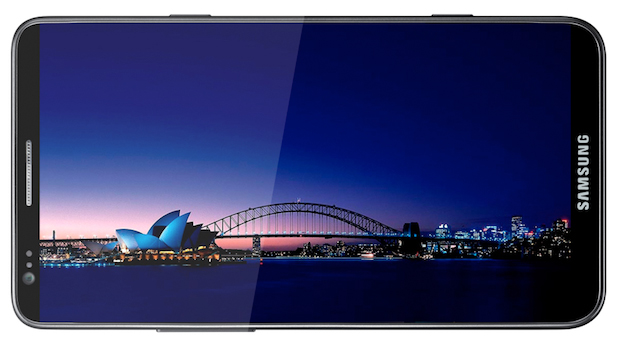
Samsung Galaxy S III full specs
We reported some exclusive details surrounding Samsung's upcoming flagship Galaxy S III smartphone this past weekend, and now we have received some more information that helps us paint a more complete picture. And as that picture becomes more clear, this sure looks like the baddest Android smartphone the world hasn't yet seen. We reported that the new Samsung flagship would launch in a simultaneous fashion across the globe, but we now have some more detailed specifications to report. Ladies and gentlemen, here is the Samsung Galaxy S III.
It may not be the color e-reader that turns Amazon's Kindle and the B&N Nook into relics, but Pandigital's Novel is actually one of the more interesting me-toos to surface. Boasting a 7-inch LCD, 1GB of storage space (not to mention an SD / MMC card slot), integrated WiFi and access to the Barnes & Noble eBookstore, the Novel is now on sale in at least a couple of places. If we were you, though, we'd probably opt for that Kohl's link -- you know, unless you just enjoy paying $50 over the $199.99 MSRP.
Update: Whoops! Looks like the Kohl's "sale" is off as well, with the price shooting up to $259.99. No deal.
Oh, hello WindPad! MSI just took the wraps off its 10-inch, Windows 7 tablet during the company's Computex press conference. The tablet is powered by a 1.66GHz Intel Atom Z530 processor, 2GB of RAM, and packs a 32GB SSD that boots Windows 7 Home Premium, though MSI has created a Wind Touch UI layer. While they were showing early prototypes, it will have two USB ports, an HDMI and a webcam when all is finalized. According to an MSI product manager on hand, the WindPad 100 will hit the market later this year for around $499. We just caught a few minutes with the tablet so hit the break for some early impressions and a short hands-on clip. MSI WindPad 100 hands-on
The 10-inch tablet is made entirely of plastic -- it does feel quite cheap, but on the other hand it's incredibly light (it's only 1.7 pounds). The prototype they had out didn't have any of the final ports, but eventually it will have an HDMI jack that should be able to output 720p video to an HDTV. Our biggest concern about the tablet comes with the speed. We noticed it taking a few seconds for applications to launch, and the Wind Touch UI was incredibly sluggish. Speaking of the interface, it's just a basic skin on top of Windows and should provide easy access to applications. The 1024x600-resolution capacitive display did seem responsive, though we would have rather it had a higher resolution.
My, how the tablets have turned. Despite valiant efforts, even Acer can't resist the temptation of diving into the ever-expanding e-reader market, but rather than going head to head with Amazon's Kindle, the company seems to be readying at least one unique creature for release into the mainstream. Thanks to a stop at Qualcomm's lair here at Computex, we think we may have found the company's numero dos. In just about every respect, the simply-titled eBook is nothing at all like the LumiRead; in fact, it looks (sort of) like an iPhone 4G after pulling a Mark McGwire. We weren't told just how large the screen was, but as you can tell from the gallery below, it's quite long. The device was reportedly made as a way to showcase Qualcomm's aging MSM7227 processor, and while there's obviously no way to know if this thing is / isn't headed for the production line, it was running Android underneath. Unfortunately, responsiveness wasn't this thing's strong suit, and it was fairly obvious that the software wasn't exactly fully baked (we surely hope not, anyway). That said, the form factor could certainly be honed into something practical, and we're sure they could get the UI humming along a bit smoother if they really put their minds to it. For now, it's the gallery below... or nothin'.
Alright, stick with us here. For some reason, ASUS decided it best to name its freshest e-reader the Eee Tablet, while its downright magical tablet goes by Eee Pad. Got all that? Good. The Eee Tablet (again, not to be confused with the Eee Pad tablet) is half e-reader, half note taker, and it's an interesting twist on a played product category. We took a few precious minutes to experiment with the device here on the Computex show floor, and overall, we like what we're seeing. Gone is the painfully slow E-Ink page refresh that Kindle owners are so accustomed to, with this particular LCD proving deliciously quick at changing screens. The only hang-up comes when you attempt to flip through too many pages, too fast -- we managed to harness a loading wheel on two occasions, both of which took around six or eight seconds to vanish and the next page to finally appear. We also confirmed that the screen only works with the included stylus, much like pen-enabled Wacom tablets. That said, the bundled stylus was perfectly weighted, and the Eee Tablet responded well to our doodling. Speaking of weight, the model shown here in Taipei was shockingly heavy (at least iPad-level heavy), while the 10-inch EP101TC was markedly less hefty. Enough chatter -- have a look at our hands-on video just past the break.
The Wall Street Journal noted this morning that Sony's rather quietly dropped the price of its Pocket Reader about $30 to $169. Now, it's actually what amounts to a sale -- the price cut lasts only through April 4th -- but that date, just two days after the iPad is made available, could give us a little insight into the timing of the drop. The Wall Street Journal also posits that this could be the first in a series of price war moves in the single purpose e-reader market which are now facing competition from multi-purpose devices such as the aforementioned iPad and the recently announced Kindle app for tablets.
We've seen so many e-book readers of late that it's difficult to get excited about another, but Kobo's angle here might just make the Kobo eReader worth a look. Kobo's game is ecosystem, and in fact it doesn't plan on making a big splash in the actual e-reader market, since it's primarily about building branded software and delivering branded e-book stores for others, including manufacturers (like Plastic Logic), and booksellers (like Borders). Still, the 6-inch E Ink reader is fine hardware in its own right, with quality plastics throughout, a nice patterned rubber back, and a big friendly d-pad for paging through books. The device is actually laid out to mitigate accidental button presses -- even the menu buttons labelled on the front are actually located on the side of the device. As far as software and capabilities, the device is utterly barebones, but at least it keeps its aesthetics throughout, and everything seems responsive and intuitive. There's no 3G onboard (you sync your e-pub titles with a desktop app over USB), no specific word on storage (our guess is in the 1GB to 4GB range), and there don't seem to be any other activities available to reading books. Hopefully you're into that sort of thing, and Kobo at least pre-loaded 100 public domain titles to get you started. The unit will be sold at Borders this summer for $149, preceded by Indigo Books & Music in Canada in May. Source
The wind sure changes very quickly, eh? Just a week ago the University of Georgia revealed that many of its study participants -- Athens residents who were given a Kindle to play with -- weren't happy with their e-reader experience, but yesterday a new study reported something fairly contrasting. Rather than doling out touchscreen-less e-readers to a group of people, the NPD Group surveyed more than 1,000 e-reader owners in late November last year, and found out that 93 percent of them were "very satisfied" or "somewhat satisfied" with their devices, while only 2 percent "expressed any level of dissatisfaction." The report also reveals that wireless access is the favorite feature for 60 percent of the users, while only 23 percent chose the touchscreen. Compared to last week's report, this probably shows that consumers who actually buy e-readers don't really care about the touch feature, whereas those on the outer circle are mainly waiting for more -- and no doubt cheaper -- touchscreen e-readers. Seriously though, only 34 percent wanted color screens? Those guys sure are easy to please.
When chipmaker Marvell told us its technology would power $99 smartphones, we took the company at its word. We weren't expecting a sub-$100, 10-inch tablet PC, however -- and we definitely weren't expecting Marvell itself to build it. Marketed at students looking to lighten their textbook load, the Marvell Moby will be an "always-on, high performance multimedia tablet" capable of full Flash support and 1080p HD playback -- thanks to those nifty Armada 600 series processors -- and supporting WiFi, Bluetooth, FM radio, GPS and both Android and Windows Mobile platforms for maximum flexibility. No release date has yet been announced; like the OLPC, Marvell will introduce the Moby in pilot programs at participating at-risk schools. While it's far too early to say if the Moby will be the universal educational e-reader Marvell hopes (that depends on software), it's certainly an intriguing device for the price, and we'll admit we're a touch jealous of those kids who'll first get to try one.


 12:38 PM
 ciprimoloci


